
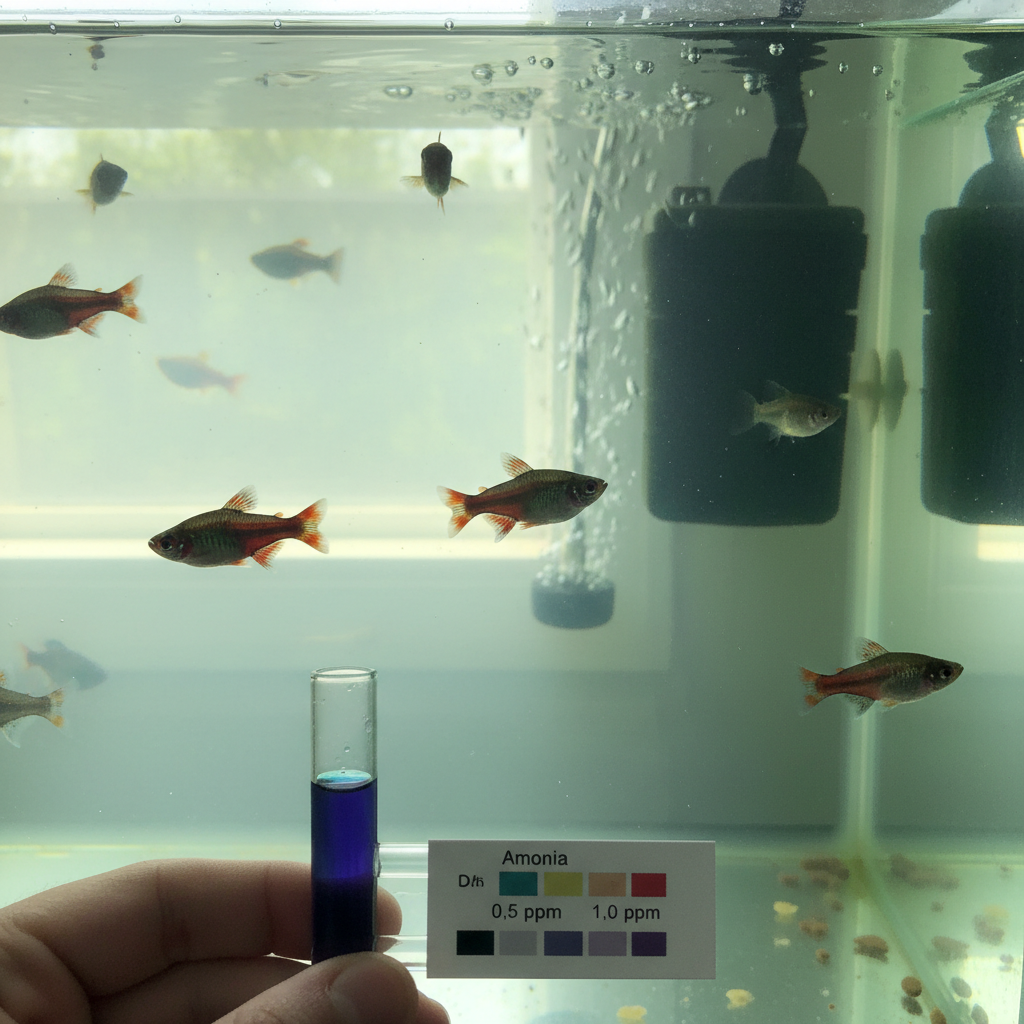
High ammonia in a fish tank usually means waste is being produced faster than the biological filter can process it. Fish release ammonia through their gills and waste. Uneaten food, dead fish, decaying plants, and dirty substrate add more. Beneficial bacteria normally convert ammonia to nitrite and then nitrate, but that system can fail or lag behind.
Why ammonia is dangerous
Ammonia irritates and damages gill tissue. Damaged gills cannot exchange oxygen well, so fish may gasp even when the filter is running. The risk depends on the ammonia level, pH, temperature, exposure time, and species sensitivity. Higher pH and warmer water make toxic un-ionized ammonia more concerning.
Ammonia poisoning fish symptoms can look like disease: clamped fins, lethargy, red gills, hiding, loss of appetite, surface gasping, flashing, and sudden deaths. Because symptoms overlap, testing is the cleanest way to confirm. But if you cannot test and the history screams ammonia risk, treat the situation as urgent.
Common causes of an ammonia spike
New tanks are the classic cause. The aquarium may not have enough beneficial bacteria yet. Adding too many fish at once can overwhelm the filter. Overfeeding is another major cause, especially when food sinks and rots behind decor. A dead fish hidden in plants or hardscape can create a sudden spike.
Maintenance mistakes are common too. Replacing all filter media, rinsing biological media under untreated tap water, turning the filter off for too long, or deep-cleaning the entire tank can reduce the bacteria that process waste. Medication can also affect the biofilter in some cases. Power outages reduce oxygen and filtration, which can trigger a chain reaction.
Emergency aquarium water change steps
First, increase aeration. Add an air stone, lower the water level slightly so the filter splashes more, or point the outlet at the surface. Second, stop feeding temporarily. Third, remove dead fish, dead leaves, and uneaten food. Fourth, do a partial water change with dechlorinated water close to the tank's temperature.
Do not use untreated tap water. Chlorine or chloramine can damage fish and bacteria. Do not scrub the filter clean during the emergency unless flow is blocked. The filter bacteria are part of the recovery. If ammonia remains high after the first water change, repeated partial changes are often safer than one extreme change that shocks temperature or pH.
If you use a conditioner that detoxifies ammonia, treat it as temporary support, not a full solution. The waste still needs to be processed or removed. Keep testing if possible, and keep water changes gentle but consistent until ammonia and nitrite stay at zero between changes.
What if you do not have a test kit?
A test kit gives the most scientific answer. Without one, the result is a risk estimate, not a confirmed reading. Still, many keepers do not own kits, so a practical workflow is needed. Ask: Is the tank new? Was the filter cleaned heavily? Were fish added recently? Is the tank overstocked? Was there overfeeding? Did any fish disappear? Is the water cloudy? Are fish gasping or gathering near flow?
If several answers are yes, ammonia or nitrite becomes a high-priority suspect. The action is still conservative: aeration, stop feeding, remove waste, and partial water changes with dechlorinated water. These steps address water stress without forcing a risky medication decision.
How ammonia differs from ich and other disease
Ammonia affects the whole tank environment. Multiple fish may show breathing stress at the same time. Ich often shows visible salt-like dots and scratching, though gill ich can be harder to see. If you see dots, compare your case with the white spots on fish guide. If there are deaths with mixed symptoms and no clear white spot pattern, use the broader why is my fish dying triage guide.
Sometimes both happen. Poor water weakens fish and makes outbreaks worse. Treating ich while ammonia is high can fail because the fish are fighting two emergencies. Stabilize the water first unless a qualified aquatic professional tells you otherwise.
Recovery plan after the emergency
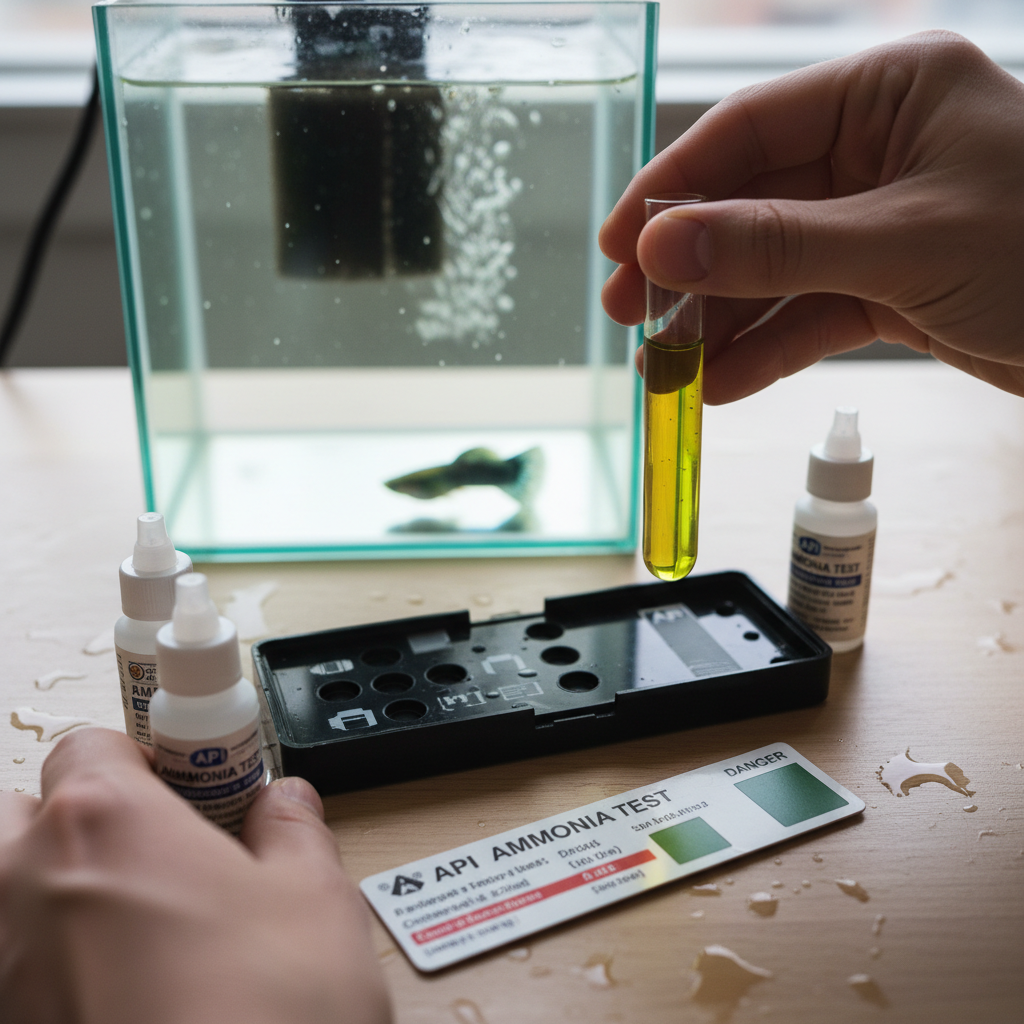
After ammonia drops, keep monitoring. Feed lightly. Do not add new fish. Keep the filter running continuously. If the tank is cycling, ammonia and nitrite can rise again. Use water changes to keep levels safer while bacteria establish. Consider bottled bacteria if appropriate, but do not treat it as a magic fix. The real fix is matching bioload to filtration and time.
Review stocking. A small tank with messy fish can produce waste faster than expected. Goldfish, large cichlids, plecos, turtles, and heavily fed predator fish create high bioload. Plants can help with nitrate over time, but they do not replace cycling and water changes during an ammonia emergency.
Once the tank is stable, build a prevention routine. Feed only what fish finish quickly, vacuum trapped waste during water changes, rinse mechanical media in old tank water, and avoid replacing all biological media at once. Add new livestock slowly so the filter bacteria can catch up with the new bioload.
Need help reading the risk?
If you are not sure whether the symptoms are coming from disease or water quality, try the AquaShelter diagnosis check before choosing a treatment.
Start aquarium diagnosisWhat not to do
Do not add more fish. Do not replace all filter media. Do not keep feeding normally because fish look hungry. Do not add medication as a guess when the main sign is gasping across the tank. Medication can reduce oxygen or stress the filter, which may worsen ammonia-related damage.
Disclaimer: AquaShelter helps with triage and safer decisions, but it does not replace a qualified aquatic veterinarian.
FAQ
What are ammonia poisoning fish symptoms?
Common signs include gasping at the surface, red or irritated gills, lethargy, clamped fins, hanging near filter flow, loss of appetite, and sudden deaths. Symptoms can overlap with other problems, so testing helps.
What should I do for high ammonia in a fish tank?
Increase aeration, stop feeding temporarily, use dechlorinated temperature-matched water for a partial water change, and protect the biological filter. Test again and repeat partial changes as needed.
Can fish recover from ammonia poisoning?
Some fish recover if exposure is caught early and water is corrected quickly. Severe gill damage can be fatal, so fast triage and stable clean water are important.