
Editorial process: The AquaShelter editorial team prepares this guide with AI-assisted drafting and automated checks for sources, safety, structure, images, and duplication. It is educational content, not a veterinary diagnosis.
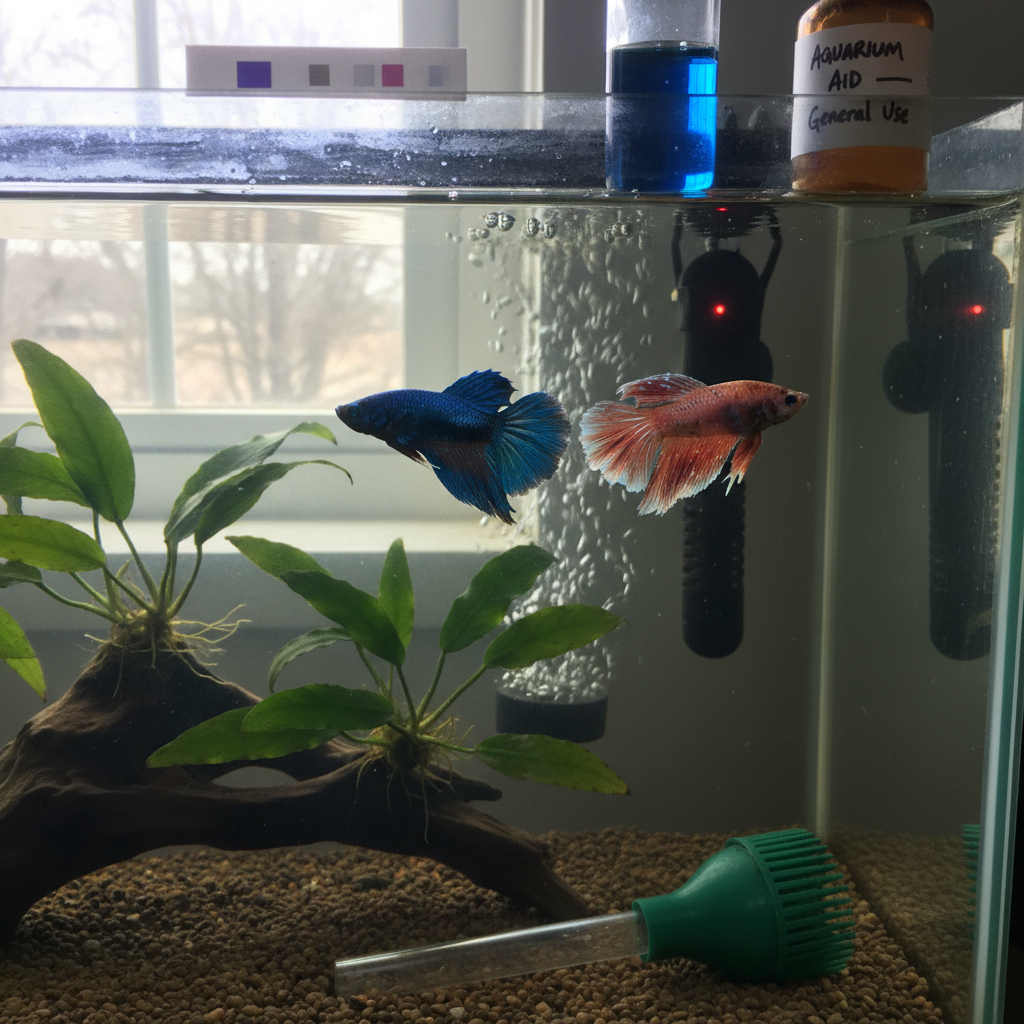
Most aquarium problems become confusing because different causes create similar symptoms. A fish with ammonia burns can clamp fins like a fish with infection. A fish with velvet can gasp like a fish in low oxygen. A stressed fish may stop eating without having a clear disease. That is why AquaShelter uses a triage-first workflow: check the tank, check the timeline, then check the visible symptoms.
Step 1: Decide if this is an emergency
Emergency signs include fish gasping at the surface, multiple fish dying suddenly, fish lying on the bottom and breathing fast, or a recent filter failure. In these cases, increase aeration, stop feeding, remove dead fish or waste, and consider a partial water change with dechlorinated water. Read the aquarium ammonia poisoning guide if gasping or sudden deaths are part of the picture.
Step 2: Look for symptom patterns
White salt-like dots point toward ich, but white patches, lumps, and injuries can be different. Ragged fins may be fin rot, nipping, or poor water. A cloudy eye may be injury, irritation, or infection. A fish not eating can be stress, bullying, bad acclimation, parasites, or water quality. One symptom is rarely enough. Pattern and timeline are what make the diagnosis safer.
Step 3: Use water history even without a kit
A test kit is the best route, but many keepers do not have one. Without a kit, use risk clues: tank age, fish count, recent additions, feeding amount, filter cleaning, water-change history, and whether fish disappeared. This does not prove the numbers, but it helps you decide whether the safest first move is water correction instead of medication.
Step 4: Match treatment to species
Some treatments are not safe for every aquarium. Scaleless fish, shrimp, snails, fry, sensitive plants, and saltwater systems can react differently. A treatment that works in one tank may harm another. Always check livestock sensitivity before using salt, copper, formalin-based products, or antibiotic-style medication.
Core guides in this cluster
Start with why is my fish dying when symptoms are mixed. Use fish white spots treatment when you see salt-like dots. Use the upcoming guides for appetite loss, surface gasping, fin rot, velvet, cloudy eye, and water test strips as they publish.
Understanding Your Fish's Distress Signals
When a fish shows signs of illness, it's easy to feel overwhelmed. Instead of immediately reaching for a medication, think like a detective. Your fish can't tell you what's wrong, but their behavior and appearance, combined with your tank's history, offer crucial clues. For instance, if you notice a fish rubbing against decorations, it could be parasites, but it could also be irritation from a recent water change or even just a new tankmate. The key is to observe the whole picture, not just one symptom.
Prioritizing Your Fish's Well-being
Before any treatment, consider the immediate comfort and safety of your fish. If a fish is gasping at the surface, the first priority is always oxygen. Increase aeration, even if it means adding an air stone or lowering the water level slightly to create more surface agitation. This simple step can buy you time to investigate further without the fish suffering from oxygen deprivation. Remember, a stressed fish is more susceptible to disease, so reducing immediate stressors is always a good first move. For more detailed guidance on common fish ailments, you can consult resources like the MSD Veterinary Manual on Diseases of Finfish.
Many aquarium problems stem from water quality issues, even if symptoms mimic infections. If you've recently added new fish, overfed, or skipped a water change, these are strong indicators that water parameters might be off. A fish with clamped fins and lethargy might be suffering from ammonia poisoning, not necessarily a bacterial infection. Addressing the water quality first, often with a partial water change and careful monitoring, can resolve many issues without the need for harsh chemicals. If you're unsure about the next steps, our fish symptom checker can help guide your initial assessment.
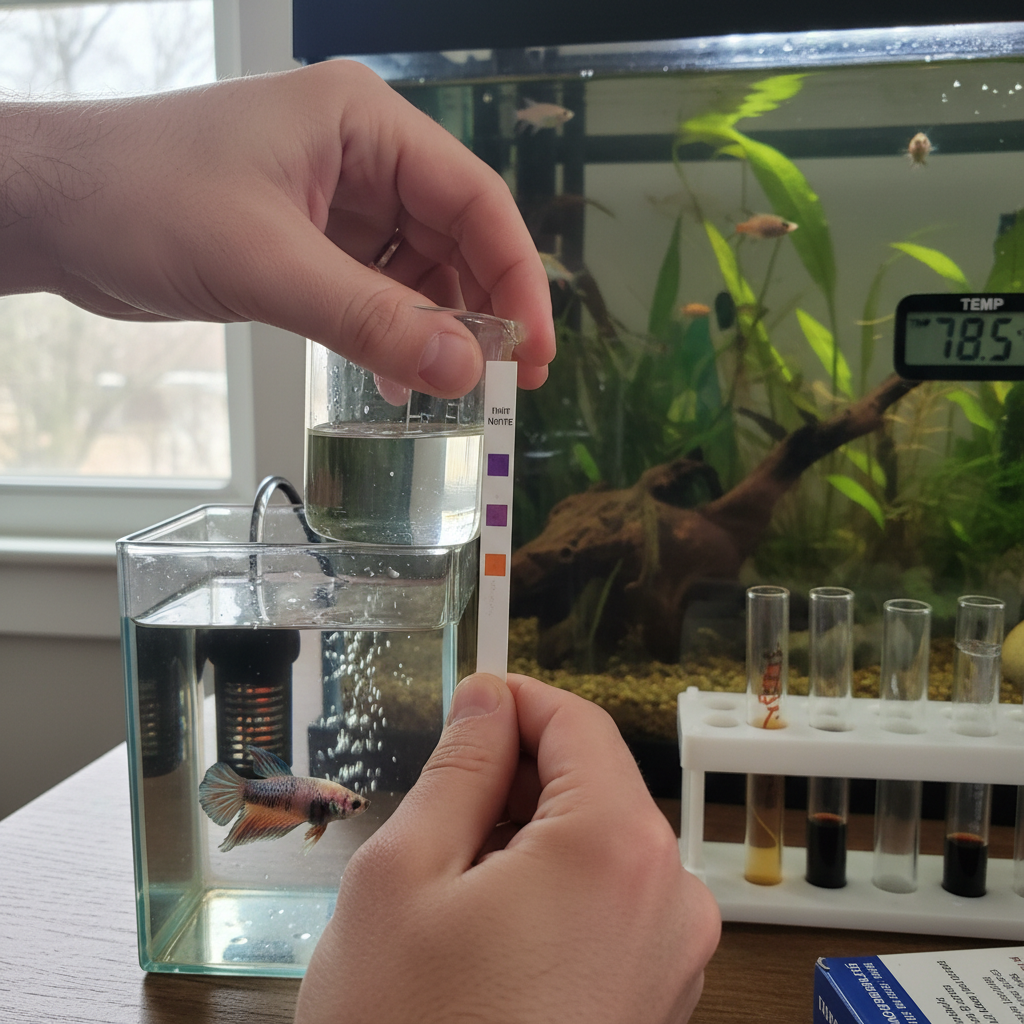
Use AquaShelter before you guess
If you are not sure whether the symptoms are coming from disease or water quality, try the AquaShelter diagnosis check before choosing a treatment.
Open the diagnosis checkDisclaimer: AquaShelter helps with triage and safer decisions, but it does not replace a qualified aquatic veterinarian.
FAQ
What is the first thing to check when fish look sick?
Check water quality, oxygen, temperature, and recent changes before choosing medication. Many disease-like symptoms start with tank stress.
Can one guide diagnose every fish disease?
No. A guide can organize triage and warning signs, but species, water history, and symptoms all matter.
When should I contact an aquatic veterinarian?
Contact a qualified aquatic veterinarian when fish are valuable, symptoms are severe, deaths continue, or treatment decisions are uncertain.