
Editorial process: The AquaShelter editorial team prepares this guide with AI-assisted drafting and automated checks for sources, safety, structure, images, and duplication. It is educational content, not a veterinary diagnosis.
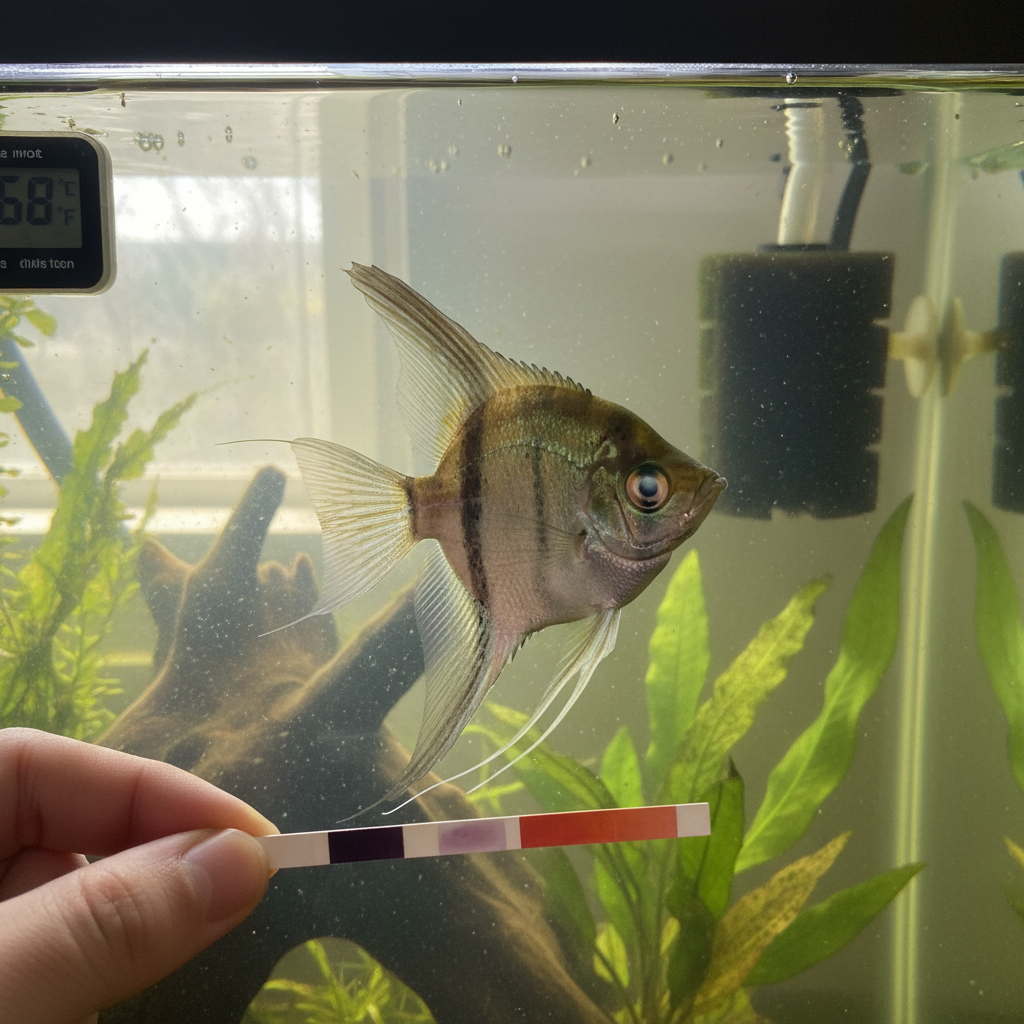
A cloudy eye is a symptom, not a single disease. The eye may look milky, hazy, swollen, scratched, or covered by a film. The cause can be local injury, poor water, bacterial infection, or a broader disease process.
One eye or both eyes?
One cloudy eye often points toward injury, fighting, rough decor, or a localized infection. Both eyes clouding at the same time makes water quality or systemic illness more likely. If several fish show eye problems, check ammonia and nitrite immediately.
Check the rest of the fish
Look for fin rot, ulcers, white spots, flashing, swelling, or fast breathing. If appetite is gone too, read fish not eating. If breathing is fast, oxygen or ammonia may be part of the problem.
First response
Improve water quality, remove sharp hazards, reduce aggression, and observe whether the eye improves. If other symptoms are present, use the AquaShelter fish diagnosis checker to connect the eye sign with appetite, breathing, water readings, and tank history. Medication may be needed if swelling, redness, ulcers, or spreading infection signs appear. Do not medicate the whole tank only because one fish has a mild cloudy eye after an obvious injury.
When it is serious
Cloudy eye with pop-eye, body swelling, pineconing, severe lethargy, or ongoing deaths is more serious. Use the fish disease guide to connect the eye sign with the full tank picture.
Your First Steps When You Spot Cloudy Eye Fish
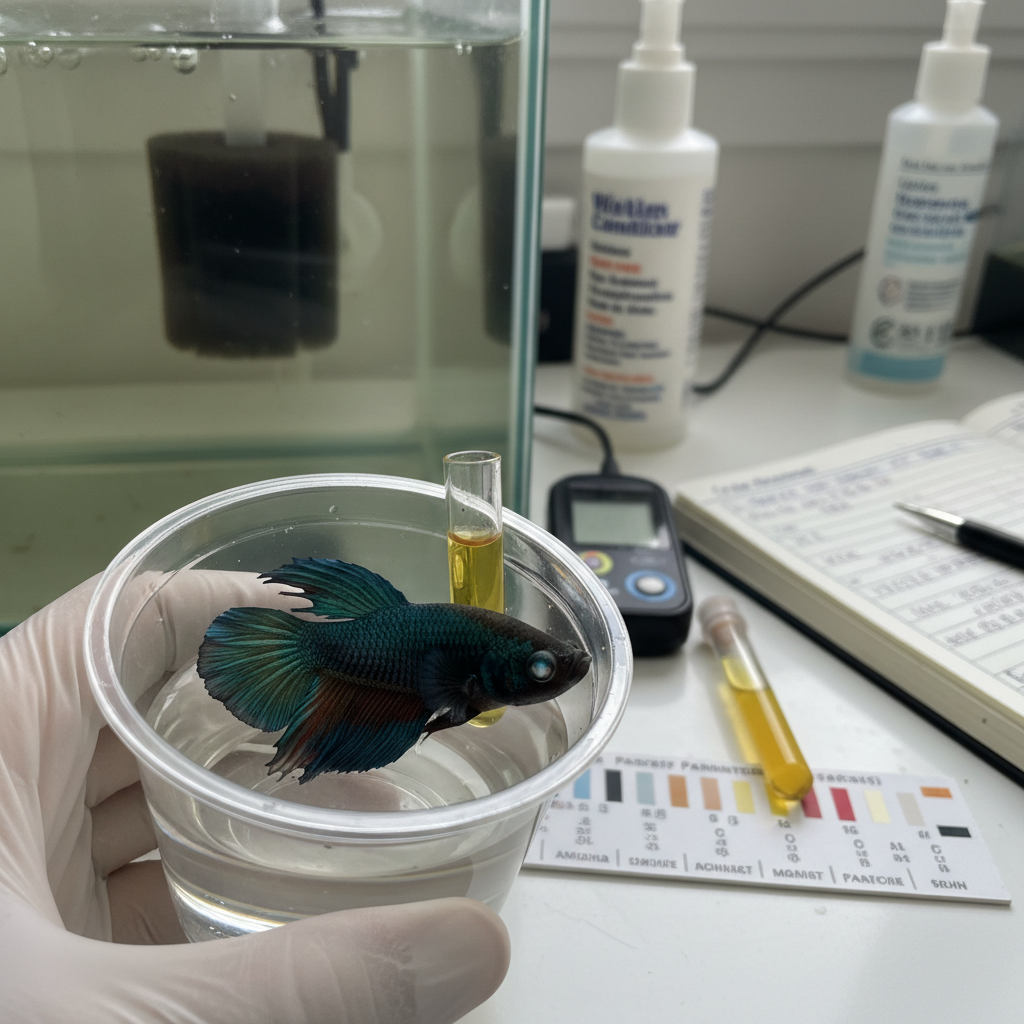
Seeing a cloudy eye on your fish can be concerning, but a quick, calm response can make all the difference. Start by assessing the situation: is it one eye or both? Are other fish affected? Are there any other symptoms like fin rot, ulcers, or changes in behavior? Your immediate priority should be to improve water quality. Perform a partial water change and test your water parameters, paying close attention to ammonia, nitrite, and nitrate levels. If you don't have a reliable liquid test kit, now is the time to get one – it's essential for understanding your tank's health. Also, check for chlorine if you're using tap water without a dechlorinator. Remove any sharp decorations that could have caused an injury.
When to Act Quickly
If you notice a cloudy eye fish, especially if it's accompanied by other signs like rapid breathing, lethargy, or if multiple fish are affected, it's time for immediate action. A single cloudy eye might be due to a minor injury, but widespread or worsening symptoms suggest a more serious underlying issue. For a comprehensive overview of fish diseases and their signs, consult the Merck Veterinary Manual fish disease overview. This resource can help you understand the broader context of fish health and when professional veterinary advice might be necessary.
After addressing water quality and potential physical hazards, observe your fish closely for the next 24-48 hours. If the cloudy eye doesn't improve, or if new symptoms develop, consider using a tool like the fish symptoms checker. This can help you connect the eye sign with other observations, such as appetite changes, breathing patterns, and tank history, to narrow down potential causes and guide your next steps. Remember, early intervention often leads to better outcomes for your fish.
Use AquaShelter before you guess
If you are not sure whether the symptoms are coming from disease or water quality, try the AquaShelter diagnosis check before choosing a treatment.
Open the diagnosis checkDisclaimer: AquaShelter helps with triage and safer decisions, but it does not replace a qualified aquatic veterinarian.
FAQ
Will cloudy eye heal on its own?
Mild injury-related cloudiness can improve in clean water, but worsening swelling, redness, or systemic signs need more attention.
Is cloudy eye contagious?
The symptom itself is not the contagious part. The underlying cause could be water quality, injury, or infection.
Should I isolate the fish?
Isolation can help if one fish is injured or bullied, but the hospital tank must be stable and heated/filtered appropriately.