
Editorial process: The AquaShelter editorial team prepares this guide with AI-assisted drafting and automated checks for sources, safety, structure, images, and duplication. It is educational content, not a veterinary diagnosis.
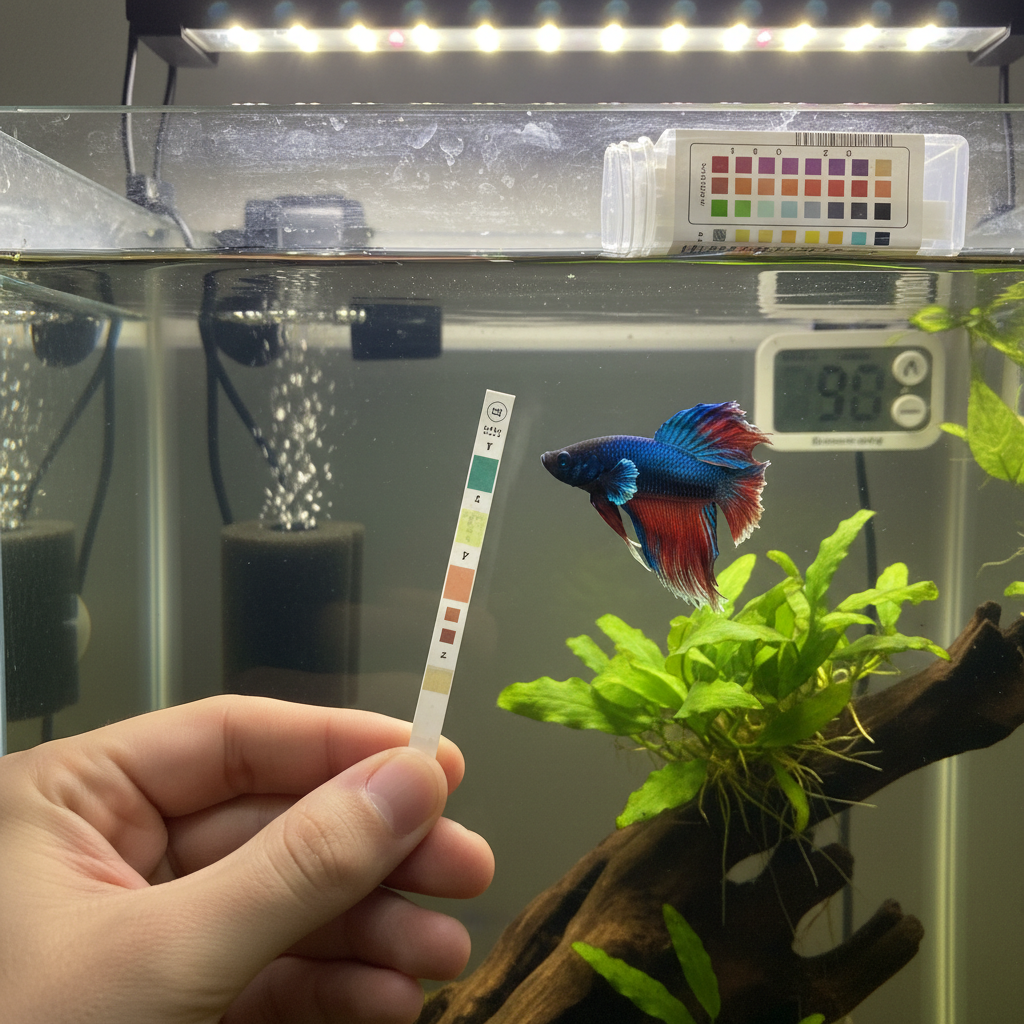
Test strips are popular because they are fast and easy. They are not always as precise as liquid kits, but they can still reveal patterns. The biggest value is knowing when water is likely unsafe and when symptoms may be disease-specific instead. For context on interpreting ammonia risk rather than relying on water clarity, see the University of Florida's ammonia guidance for aquaculture systems.
Ammonia and nitrite
Ammonia and nitrite should be treated as urgent in stocked tanks. If either is above zero and fish are stressed, increase aeration, stop feeding, and use dechlorinated partial water changes. Review aquarium ammonia poisoning if fish are gasping or dying.
Nitrate
Nitrate is less immediately toxic than ammonia or nitrite, but high nitrate can signal maintenance problems and chronic stress. Water changes, stocking review, feeding control, and plant growth can help manage it over time.
pH, KH, and GH
pH matters, but stability often matters more than chasing a perfect number. KH helps buffer pH. GH reflects mineral hardness. Different species prefer different ranges, so use the numbers in context instead of adjusting blindly.
Chlorine and tap water
If chlorine appears, check your dechlorinator process. Untreated tap water can harm fish and filter bacteria. This is especially important after emergency water changes.
Use strips with symptoms
A strip result is most useful when paired with behavior. Fish not eating, gasping, clamped fins, or sudden deaths become easier to triage when you know whether water is safe. For symptom-first navigation, use the fish disease guide.
When to Test: Your Fish Come First
Test strips are a quick way to check water quality, especially when your fish are showing signs of stress. Don't wait for a scheduled test if you see clamped fins, gasping, or unusual behavior. Your fish are telling you something is wrong, and a test strip can help you understand if it's a water quality issue. For example, if your usually active guppies are huddled at the surface, a quick ammonia test can confirm if the water is the problem, prompting an immediate water change.
Prioritizing Fish Health with Water Tests
Your fish's behavior is the most important indicator of their well-being. If they are lethargic, hiding more than usual, or showing physical changes like fin rot, it's time to grab your aquarium water test strip guide and check the parameters. While regular testing is good practice, an emergency test based on fish symptoms can prevent a minor issue from becoming a major crisis. Understanding what the numbers really mean in the context of your fish's health allows you to act quickly and effectively. For a deeper dive into general fish disease signs and diagnostic limitations, consult resources like the Merck Veterinary Manual.
Consider a scenario where your normally vibrant neon tetras suddenly appear pale and are swimming erratically. This could be a sign of poor water quality. Using your aquarium water test strip guide, you might find elevated nitrite levels. This immediate feedback allows you to perform a partial water change and increase aeration, potentially saving your fish. If you're unsure what symptoms mean, or if water parameters seem fine but fish are still struggling, use a fish symptoms checker to help narrow down potential causes.
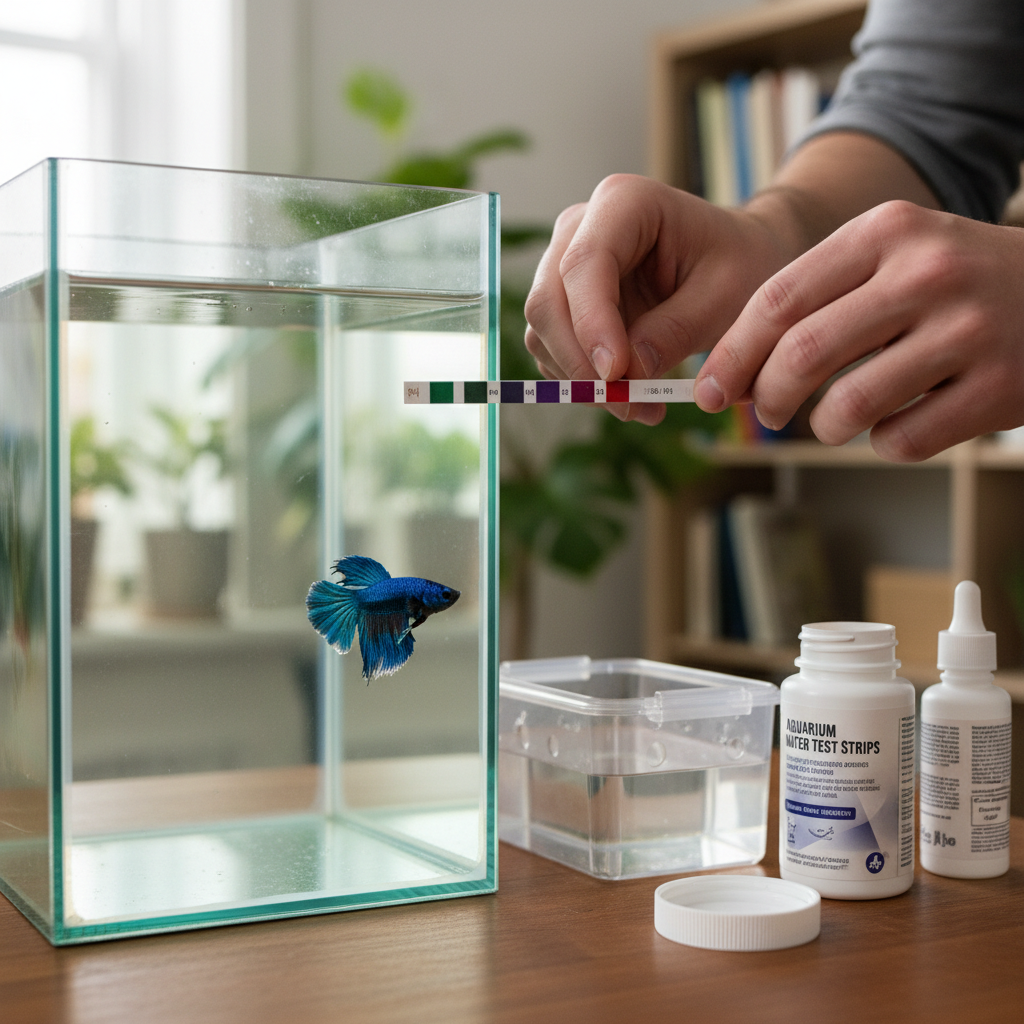
Use AquaShelter before you guess
If you are not sure whether the symptoms are coming from disease or water quality, try the AquaShelter diagnosis check before choosing a treatment.
Open the diagnosis checkDisclaimer: AquaShelter helps with triage and safer decisions, but it does not replace a qualified aquatic veterinarian.
FAQ
Are aquarium test strips accurate?
They are useful for screening, though liquid kits can be more precise. Follow timing and storage instructions carefully.
Which readings are most urgent?
Ammonia, nitrite, chlorine, temperature, and oxygen-related signs are the urgent checks when fish look sick.
Should I adjust pH immediately?
Usually no. Sudden pH changes can stress fish. Understand KH, species needs, and the cause before adjusting.