
Editorial process: The AquaShelter editorial team prepares this guide with AI-assisted drafting and automated checks for sources, safety, structure, images, and duplication. It is educational content, not a veterinary diagnosis.
What is Overfeeding Fish and Why Does it Happen?
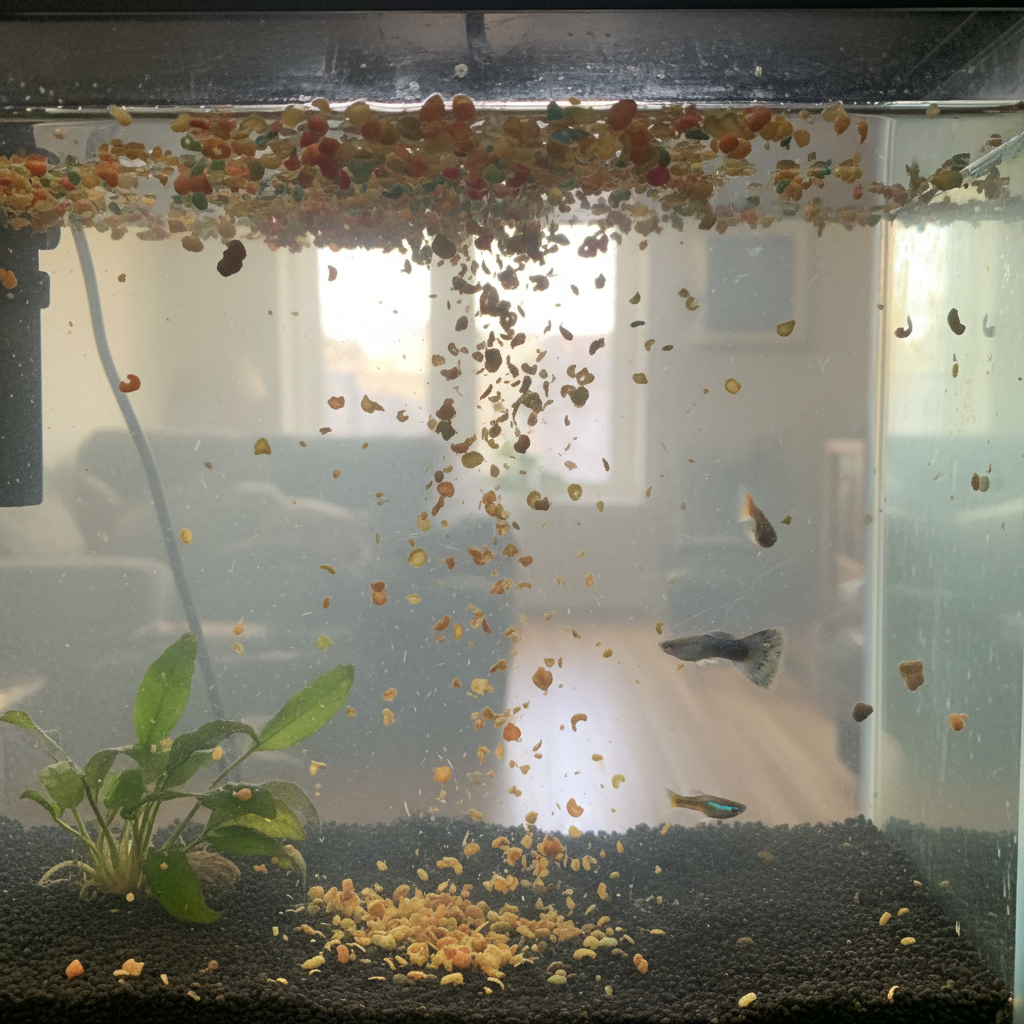
Overfeeding occurs when fish are given more food than they can consume in a short period, typically within two to five minutes. This often happens because fishkeepers misinterpret their fish's behavior. Fish often appear to be 'begging' for food, swimming to the front of the tank or darting around when they see you. This behavior is usually learned, not a true sign of hunger. Fish have small stomachs, roughly the size of their eye, and do not need large quantities of food. The desire to interact with pets or a misunderstanding of their dietary needs are common reasons for overfeeding. When the signs overlap, fish mouth rot gives a more focused next step.
The Immediate Dangers of Overfeeding to Water Quality
Uneaten food quickly breaks down in the aquarium, releasing harmful compounds into the water. This decomposition process consumes dissolved oxygen, which fish need to breathe. More critically, it leads to spikes in ammonia and nitrites, both highly toxic to fish. Ammonia poisoning can damage gills and internal organs, while nitrite poisoning prevents blood from carrying oxygen. Overfeeding also contributes to cloudy water, excessive algae growth due to nutrient overload, and can clog your filter, reducing its efficiency. These changes create a stressful and dangerous environment for your fish.
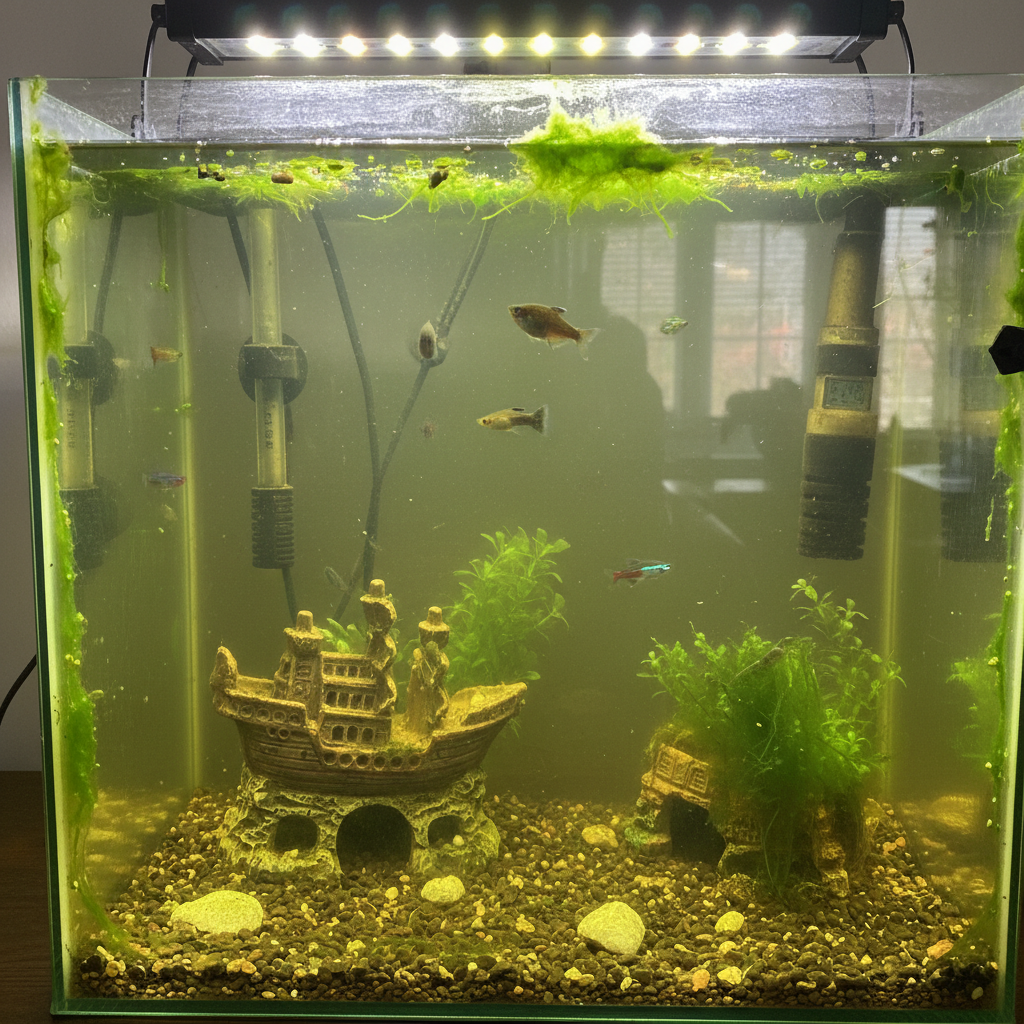
If you notice your water becoming cloudy or your fish gasping at the surface, these could be signs of declining water quality. AquaShelter's Fish Symptom Checker can help you identify potential issues related to water parameters and guide you on next steps.
Long-Term Health Risks for Your Fish from Overfeeding
Beyond immediate water quality issues, consistent overfeeding poses significant long-term health risks to your fish. Poor water conditions weaken a fish's immune system, making them more susceptible to diseases like fin rot and fungal infections. Internally, overfeeding can lead to digestive problems such as constipation and bloating. In some species, particularly those with specific dietary needs like African cichlids and rainbowfish, a diet too rich in protein or fat from overfeeding can cause fatty liver disease (hepatic lipidosis), which can be fatal. These issues shorten a fish's lifespan and reduce their overall quality of life.
Signs You Might Be Overfeeding Your Aquarium Fish
Several clear indicators can signal that you are overfeeding your fish. Look for uneaten food accumulating on the substrate or floating at the surface after feeding time. Your aquarium water might appear cloudy or murky, and you may notice an increase in algae growth on glass and decorations. Fish themselves might show signs of stress, such as lethargy, gasping at the surface, or developing physical symptoms like bloating or frayed fins. An increase in detritus worms or planaria in the substrate can also point to an excess of decaying organic matter from overfeeding.
Uneaten food quickly pollutes the water, a primary danger of overfeeding.How to Prevent Overfeeding: Best Practices for Fish Feeding
Preventing overfeeding is straightforward with a few key practices. Feed your fish small amounts, only what they can consume entirely within two to five minutes. It's often better to feed once or twice a day rather than one large meal. Choose high-quality food appropriate for your fish species and size. Remove any uneaten food after the feeding window to prevent it from decaying. Educate family members who might also feed the fish about proper portions. Using an automatic feeder can help regulate feeding amounts and schedules, especially if you are prone to overfeeding or are away from home.
Algae blooms and cloudy water are common visual indicators of nutrient overload from overfeeding.What to Do If You've Already Overfed Your Fish
If you suspect you've overfed your fish, immediate action can mitigate the damage. First, skip the next scheduled feeding to allow your fish to digest and to reduce the organic load in the tank. Use a net or gravel vacuum to remove any visible uneaten food from the substrate. Perform a partial water change, typically 25%, while thoroughly gravel vacuuming to remove accumulated waste. Check your filter for clogging and clean it if necessary. Monitor your water parameters closely, especially ammonia and nitrite levels, using a reliable test kit. AquaShelter's Aquarium Treatment Safety Checker can help you understand how to safely address water quality issues.
Overfeeding can lead to internal issues like bloating or stress-induced diseases like fin rot.Safety Note: If your fish show severe symptoms like extreme bloating, difficulty swimming, or rapid breathing, consult an aquatic veterinarian. Water quality issues can quickly become life-threatening.
Use AquaShelter before you guess
If you are not sure whether the symptoms are coming from disease or water quality, try the AquaShelter diagnosis check before choosing a treatment.
Open the diagnosis checkDisclaimer: AquaShelter helps with triage and safer decisions, but it does not replace a qualified aquatic veterinarian.
FAQ
What are the signs of overfeeding fish?
Signs of overfeeding include uneaten food on the substrate, cloudy water, excessive algae growth, fish gasping at the surface, lethargy, bloating, and the presence of detritus worms.
What happens if you overfeed fish?
Overfeeding leads to poor water quality with high ammonia and nitrite levels, low oxygen, increased fish stress, and health problems like fin rot, constipation, bloating, and fatty liver disease.
How much food should I feed my fish?
Feed your fish only what they can completely consume within two to five minutes. It's better to offer small meals once or twice a day rather than one large portion.