
Editorial process: The AquaShelter editorial team prepares this guide with AI-assisted drafting and automated checks for sources, safety, structure, images, and duplication. It is educational content, not a veterinary diagnosis.
Introduction: Why Water Testing Matters for Fish Health
The health of your aquarium fish depends entirely on the quality of their water. Many water problems are invisible to the naked eye. Regular water testing helps you detect these issues early. Aquarium water test strips offer a simple and fast way to monitor your tank's conditions. They are a common tool for fishkeepers to keep their aquatic environment stable and safe. A useful follow-up guide is fish bacterial infection if the tank history points that way. For the related symptom path, use betta fish bacterial infection alongside the checks above.
What Are Aquarium Water Test Strips and How Do They Work?
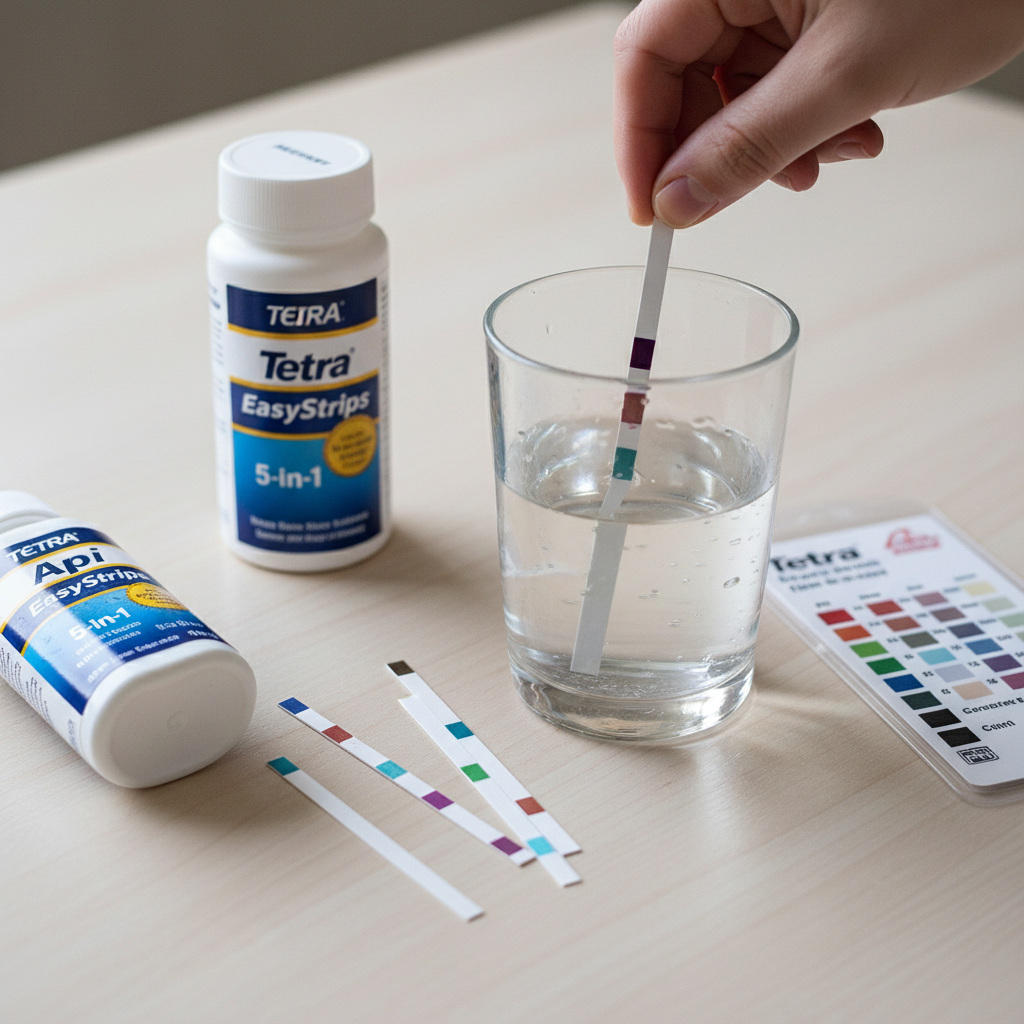
Aquarium water test strips are small plastic strips with several colored pads. Each pad contains chemicals that react to specific substances in your tank water. When you dip a strip into the water, these pads change color. You then compare these colors to a chart on the test strip bottle. This comparison tells you the levels of different water parameters. Most strips test for multiple parameters at once, making them very convenient.
Key Parameters Aquarium Test Strips Measure (and Why They Matter)
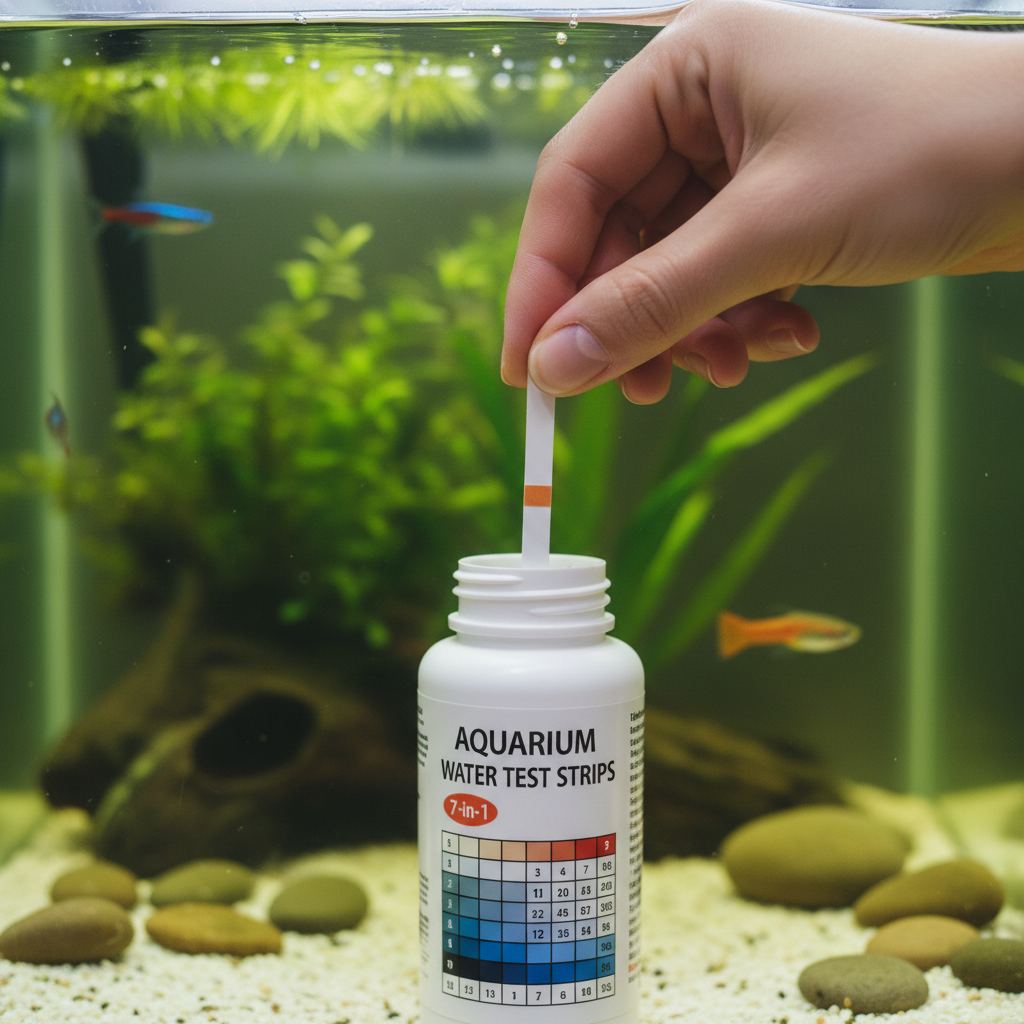
Most multi-parameter test strips check for several important water conditions:
- pH: This measures how acidic or alkaline your water is. Most freshwater fish prefer a neutral pH, around 7.0. Sudden changes can stress fish.
- Nitrite (NO2): This is a toxic compound produced during the nitrogen cycle. Healthy tanks should have zero nitrite. Any detectable level is dangerous for fish.
- Nitrate (NO3): This is the final product of the nitrogen cycle. While less toxic than ammonia or nitrite, high levels can still harm fish. Regular water changes help keep nitrate low.
- General Hardness (GH): This measures the concentration of calcium and magnesium ions. It affects fish osmoregulation and overall health.
- Carbonate Hardness (KH): This measures the water's buffering capacity. It helps stabilize pH. Low KH can lead to dangerous pH swings.
- Chlorine/Chloramine: These chemicals are often found in tap water and are highly toxic to fish. They must be removed with a water conditioner before adding water to your tank.
Ammonia is another critical parameter. While some strips test for it, liquid test kits often provide more accurate ammonia readings. Understanding these parameters helps you maintain a healthy tank.
Step-by-Step Guide: How to Use Aquarium Water Test Strips Correctly
Using test strips correctly ensures you get the most reliable results:
- Remove one test strip from the bottle. Immediately recap the bottle tightly to protect the remaining strips from moisture.
- Dip the entire strip into your aquarium water for the time specified on the bottle, usually 1-2 seconds.
- Remove the strip without shaking off excess water.
- Hold the strip level and wait for the recommended time, typically 30-60 seconds.
- Compare the colors on the strip to the color chart on the test strip bottle. Do this under good lighting.
Always check the expiry date on your test strip bottle. Expired strips can give inaccurate readings. Store them in a cool, dry place away from direct sunlight.
Aquarium Test Strips vs. Liquid Kits: Accuracy and Use
Aquarium test strips are quick and easy to use. They are great for routine checks and for beginners. However, they can be less precise than liquid test kits. Humidity can affect the chemical pads, and reading the colors can be subjective. Liquid test kits, while more time-consuming, offer greater accuracy and precision. They are often recommended for critical situations, such as cycling a fish tank, or when fish show symptoms of illness. Think of strips as a good 'first glance' tool. If a strip shows a problem, or if your fish are unwell, confirm the results with a liquid test kit.
Interpreting Your Test Strip Results: What Do the Colors Really Mean?
Once you've compared your strip to the color chart, you'll have a reading for each parameter. Ideal ranges vary slightly depending on your fish species. However, some general guidelines apply:
- pH: Most community freshwater fish thrive between 6.5 and 7.5.
- Nitrite: Should always be 0 ppm. Any color indicating nitrite means a problem.
- Nitrate: Aim for below 20 ppm for most tanks. Higher levels suggest a need for water changes.
- Chlorine: Should always be 0 ppm.
If your readings are outside these ranges, it's time to investigate further. For a deeper dive into interpreting specific numerical readings, you can refer to our Aquarium Water Test Strip Guide: What the Numbers Really Mean.
Safer Next Steps: What to Do When Your Test Strips Show a Problem
Finding an issue with your test strips means it's time to act. Here are some common problems and solutions:
- High Nitrite or Ammonia: These are highly toxic. Perform an immediate partial water change (25-50%). Re-test the water after a few hours. Review our guide on Aquarium Ammonia Poisoning for emergency steps. If your tank is new, it might be going through the cycling a fish tank process.
- High Nitrate: This usually indicates a need for more frequent or larger water changes. Ensure you are not overfeeding your fish.
- Incorrect pH, GH, or KH: Gradual adjustments are key. Rapid changes can stress fish. Research the ideal parameters for your specific fish species.
- Chlorine Present: Always use a water conditioner that neutralizes chlorine and chloramines when adding tap water.
If your fish are showing symptoms of illness alongside poor water quality, use the AquaShelter fish symptoms checker to help narrow down potential causes. For any interventions or treatments, consult the Aquarium treatment safety checker to ensure you are taking safe steps. AquaShelter's tools can help you correlate water issues with fish symptoms for a more complete diagnosis.
Tips for Maximizing the Reliability of Your Aquarium Test Strips
To get the most accurate results from your test strips:
- Store them properly: Keep the bottle tightly sealed in a cool, dry place. Moisture can degrade the chemical pads.
- Check expiry dates: Expired strips give unreliable readings.
- Use good lighting: Compare colors to the chart under natural or bright, consistent light.
- Consider a liquid kit for confirmation: If a strip shows a critical issue, or if your fish are unwell, use a liquid test kit to confirm the reading.
- Test regularly: Weekly testing helps you catch problems early.
Test strips are a valuable part of routine aquarium maintenance. They help you quickly identify potential issues, allowing you to take corrective action before your fish's health is severely impacted.
Your Fish Are the Ultimate Test Strips
While aquarium water test strips provide valuable data, your fish are often the first and most sensitive indicators of water quality problems. Observing their behavior, appearance, and activity levels can alert you to issues even before a test strip shows a significant change. For example, if your fish are gasping at the surface, it could indicate low oxygen or high ammonia/nitrite, even if your strip readings are borderline. Similarly, clamped fins, lethargy, or a loss of appetite are all signs that something is amiss in their environment. Don't wait for a test strip to confirm what your fish are already telling you.
Responding to Fish Signals and Test Results
When you notice unusual fish behavior, combine that observation with your test strip results. If your fish are stressed and your nitrite levels are elevated, you have a clear action plan: perform a partial water change immediately and consider adding a water conditioner that detoxifies nitrite. If your fish are showing signs of illness, such as white spots or fin rot, and your water parameters are stable, the issue might be a disease rather than water quality. In such cases, further investigation is needed. For a comprehensive guide on identifying and addressing fish health issues, consider using a fish symptom checker.
Remember, test strips are a snapshot, not a continuous monitor. Regular observation of your fish, coupled with consistent water testing, creates a powerful early warning system. This proactive approach helps you maintain a healthy and thriving aquarium, preventing minor issues from escalating into serious health crises for your aquatic companions. For more detailed information on fish health and disease, consult resources like the Merck Veterinary Manual.
Use AquaShelter before you guess
If you are not sure whether the symptoms are coming from disease or water quality, try the AquaShelter diagnosis check before choosing a treatment.
Open the diagnosis checkDisclaimer: AquaShelter helps with triage and safer decisions, but it does not replace a qualified aquatic veterinarian.
FAQ
Are aquarium test strips accurate?
Aquarium test strips offer a good general indication of water parameters. They are convenient for quick, routine checks. However, liquid test kits are generally more accurate and precise, especially for critical parameters like ammonia and nitrite. If a strip shows a concerning reading, it's wise to confirm with a liquid test kit.
What do aquarium test strips test for?
Most multi-parameter aquarium test strips measure pH, nitrite, nitrate, general hardness (GH), carbonate hardness (KH), and chlorine/chloramine. Some specialized strips may also test for ammonia, though this is less common for multi-strips.
How often should I test my aquarium water with strips?
For established aquariums, testing your water with strips once a week is a good practice. For new tanks that are still cycling, or if you notice any signs of fish illness, you should test more frequently, perhaps daily or every other day.