
Editorial process: The AquaShelter editorial team prepares this guide with AI-assisted drafting and automated checks for sources, safety, structure, images, and duplication. It is educational content, not a veterinary diagnosis.
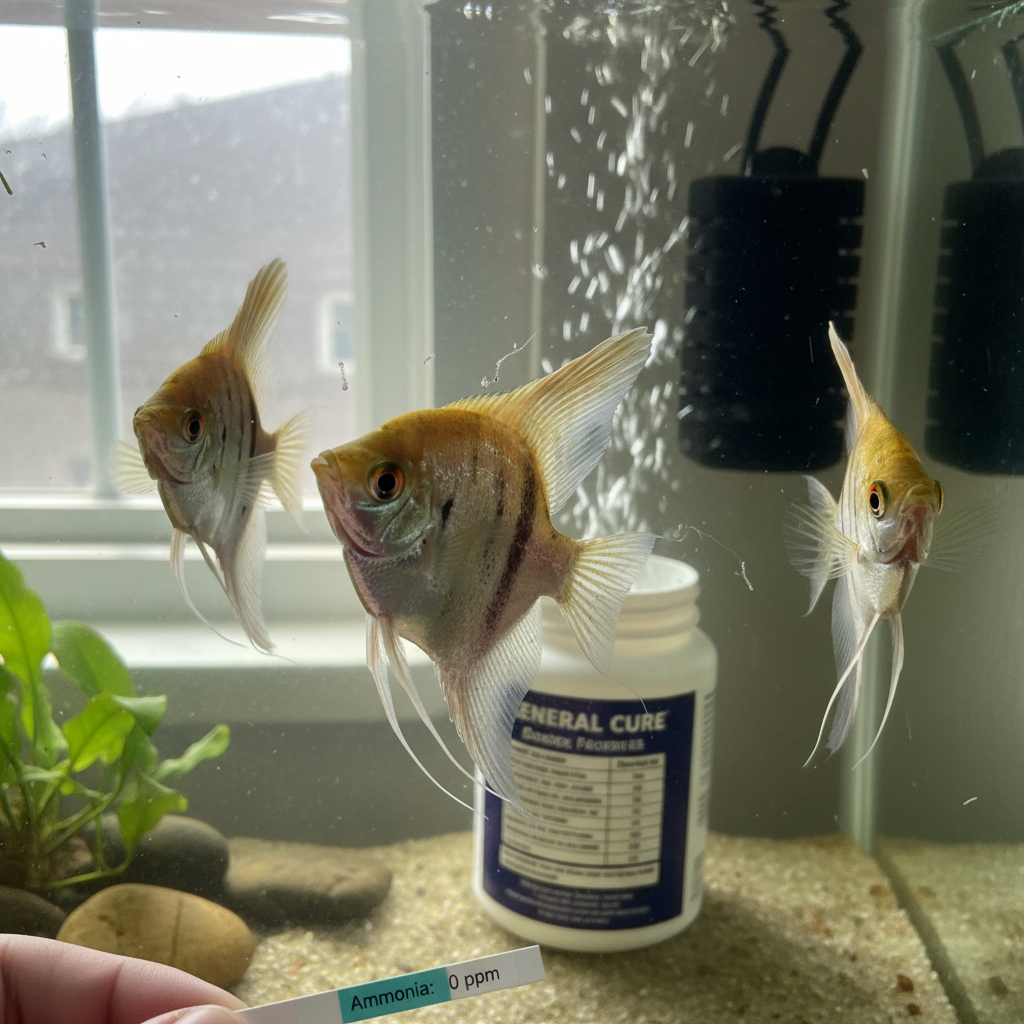
What Are Gill Flukes and How Do They Harm Fish?
Gill flukes are flatworms from the Monogenea family. They have a direct life cycle, meaning they don't need another host to reproduce, which allows them to spread quickly in an aquarium. These parasites use hooks to latch onto delicate gill tissue, feeding on mucus and blood. This causes irritation, inflammation, and damage to the gill filaments, which are essential for your fish to extract oxygen from the water. For the related symptom path, use velvet disease fish alongside the checks above. When the signs overlap, fungal infection in betta fish gives a more focused next step.
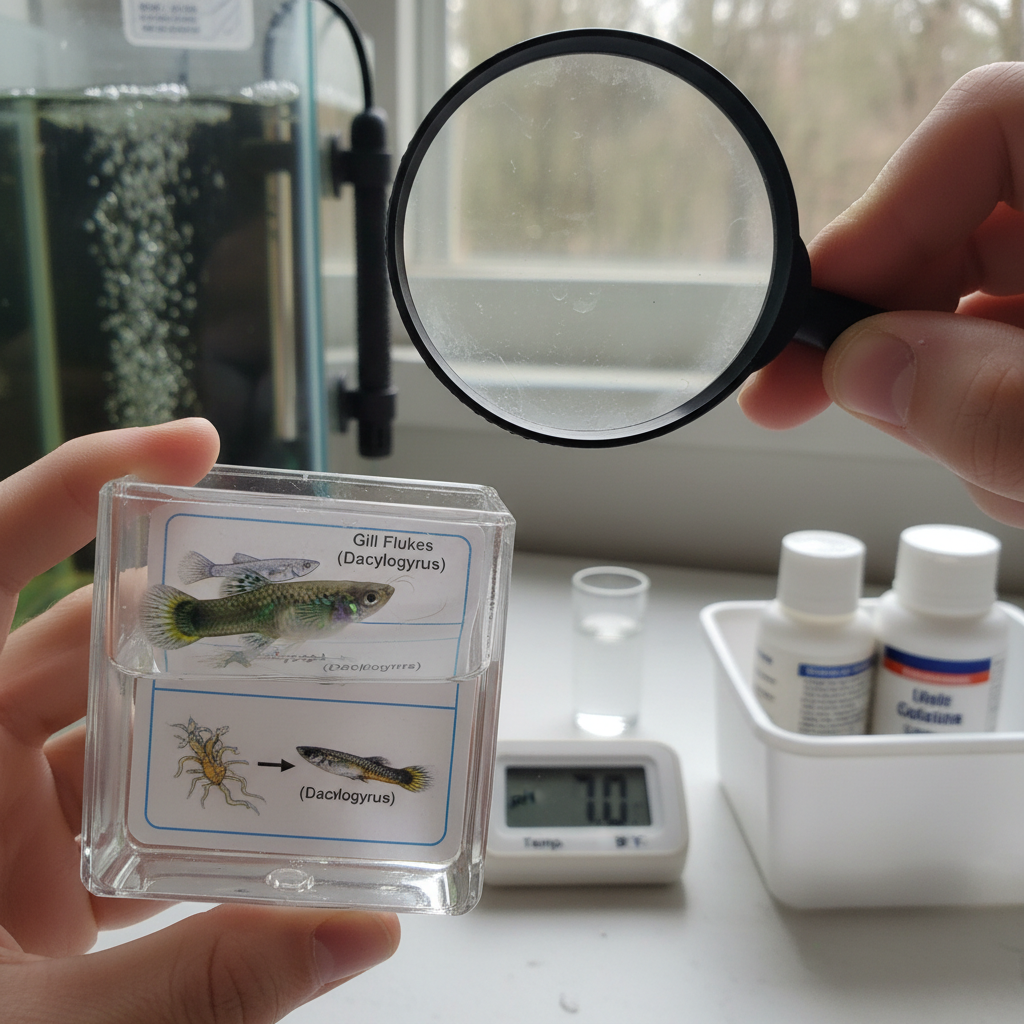
When gills are damaged, your fish struggles to get enough oxygen, leading to breathing problems. The constant irritation also makes the gills vulnerable to secondary bacterial or fungal infections, further compromising your fish's health. For example, if you notice your fish constantly rubbing against tank decorations, it's often a desperate attempt to dislodge these irritating parasites.
Recognizing the Signs of Gill Flukes
Since you can't easily see the flukes themselves, you'll need to pay close attention to your fish's behavior and appearance. Many of these symptoms can also point to other fish diseases or water quality issues, so always start by observing carefully and testing your water.
- Fast Breathing or Gasping: This is often the first and most obvious sign. Fish with gill flukes will usually breathe much faster than normal, or even gasp at the surface, trying to get enough oxygen. This can also happen with ammonia poisoning, so always test your water parameters first. You can learn more about this in our guide on fish gasping at surface.
- Clamped Fins: Fish often hold their fins tight against their body when they're stressed or sick. You can find more details about this in our article on fish with clamped fins.
- Rubbing or Flashing: Your fish might rub its gills or its whole body against tank decorations or the substrate, trying to scratch off the parasites. This is similar to the behavior we talk about in fish flashing against decor.
- Not Eating: Sick fish often refuse food, becoming lethargic and just not themselves. Our article on fish not eating provides more context.
- Pale or Inflamed Gills: In severe cases, the gills might look pale due to blood loss, or they could be inflamed and swollen.
- Excess Mucus: The gills might produce extra mucus as a defense, which can make it even harder for the fish to breathe.
Diagnosing and Treating Gill Flukes
The most certain way to diagnose gill flukes is by looking at a gill biopsy under a microscope, typically done by a vet or experienced aquarist. However, if you see several of the symptoms above, especially fast breathing and flashing, and you've already confirmed your water quality is good, then gill flukes are a strong possibility. For more information on parasitic diseases in fish, you can consult resources like the Merck Veterinary Manual on Parasitic Diseases of Fish.
If you suspect gill flukes, you need to act quickly. Several medications are effective against these parasites:
- Praziquantel: This is a widely used and generally safe medication for gill flukes, available in various aquarium-specific forms. Always follow the manufacturer's instructions carefully for dosage and duration.
- Formalin: Formalin baths can be effective but require extreme caution. It is toxic to fish if overdosed and can reduce oxygen levels. This treatment is generally not recommended for beginners.
- Salt Baths: For some robust fish species, short-term salt baths (using non-iodized aquarium salt) can help reduce stress and dislodge some parasites. However, for a serious infestation, it's usually not a complete cure.
During treatment, always remove activated carbon from your filter, as it will absorb the medication. Ensure good aeration, as some medications can lower oxygen levels. After treatment, perform a significant water change and closely monitor your fish. For guidance on safe treatment, consult our aquarium treatment safety checker.
Preventing Gill Fluke Outbreaks
Prevention is always better than treatment. Always quarantine new fish for at least 2-4 weeks before adding them to your main tank. During quarantine, watch them closely for any signs of illness. If you've had fluke problems before, you might even consider a preventative treatment during this period. Maintain excellent water quality and avoid overcrowding, as stressed fish are much more likely to succumb to parasites.
What Are Gill Flukes and How Do They Affect Your Fish?
Imagine trying to breathe with something constantly irritating your throat. That's a bit like what your fish experience with gill flukes. These tiny parasites, invisible to the naked eye, attach to your fish's delicate gills. They feed on mucus and blood, causing inflammation and damage. This makes it incredibly hard for your fish to get enough oxygen from the water, leading to labored breathing and stress. Because they have a direct life cycle, gill flukes can spread rapidly in an aquarium, turning a small problem into a widespread issue quickly.
Recognizing the Subtle Signs in Your Aquarium
Since you can't see the gill flukes themselves, observing your fish's behavior is key. Look for changes like rapid breathing, gasping at the surface, or rubbing against tank decorations. Your fish might also hold its fins clamped close to its body, a common sign of stress or illness. These behaviors are your fish's way of telling you something is wrong. For example, if you notice a fish constantly scratching its gills on a plant, it's often an attempt to dislodge these irritating parasites. Always start by checking your water parameters, as poor water quality can mimic some of these symptoms. If you're unsure about the cause of your fish's symptoms, our fish symptom checker can help you narrow down possibilities.
Early detection is crucial. If you suspect gill flukes, isolating the affected fish in a quarantine tank allows for closer observation and prevents further spread. For more general information on fish diseases and their diagnosis, the Merck Veterinary Manual offers valuable insights into diagnostic limitations and veterinary care context.
Use AquaShelter before you guess
If you are not sure whether the symptoms are coming from disease or water quality, try the AquaShelter diagnosis check before choosing a treatment.
Open the diagnosis checkDisclaimer: AquaShelter helps with triage and safer decisions, but it does not replace a qualified aquatic veterinarian.
FAQ
Can I see gill flukes with my bare eyes?
No, gill flukes are microscopic, so you'll need to rely on observing your fish's symptoms to know if they are present.
Will gill flukes spread to my other fish?
Yes, gill flukes have a direct life cycle, meaning they can easily spread from one fish to another in the same tank without needing another host. This often requires treating the entire tank.
What is the most effective medication for gill flukes?
Praziquantel is widely considered one of the most effective and safest medications for treating gill flukes in aquarium fish. Always follow the specific product instructions for dosage and duration.
Can gill flukes be present without obvious symptoms?
Yes, fish can carry a low number of gill flukes without showing severe symptoms, especially if they are healthy. Stress, poor water quality, or injury can cause these low-level infestations to become a full-blown problem.
Can gill flukes spread to different types of fish in a community tank?
Yes, gill flukes are highly contagious and can easily spread between different fish species in a community tank. Their direct life cycle allows them to infect any fish present, making early detection and quarantine crucial.