
Editorial process: The AquaShelter editorial team prepares this guide with AI-assisted drafting and automated checks for sources, safety, structure, images, and duplication. It is educational content, not a veterinary diagnosis.
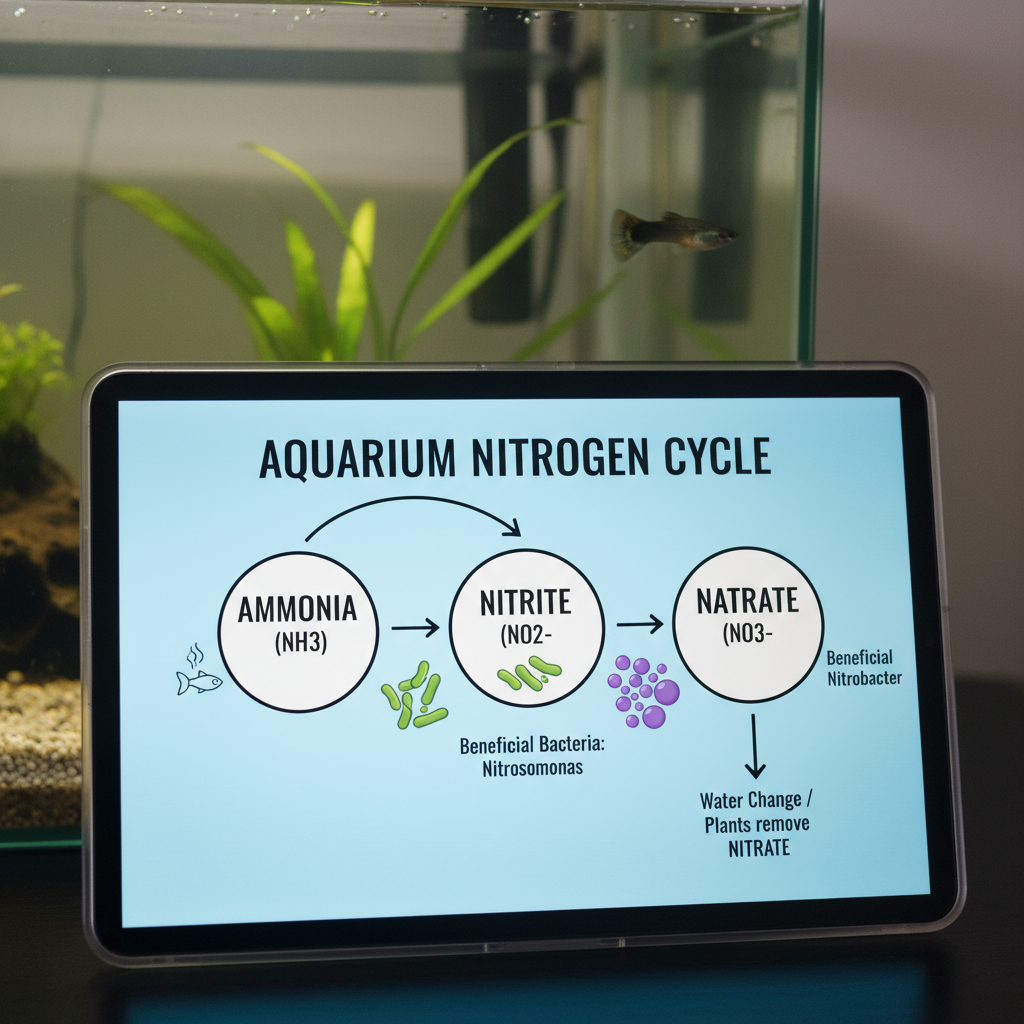
What is Nitrate in Your Aquarium? Understanding the Nitrogen Cycle
Nitrate is a compound that forms naturally in your aquarium as part of the nitrogen cycle. This cycle is the biological filtration process that converts toxic fish waste into less harmful substances. First, fish waste and uneaten food break down into ammonia. Then, beneficial bacteria convert ammonia into nitrite. Finally, another group of beneficial bacteria transforms nitrite into nitrate. Unlike ammonia and nitrite, which are highly toxic, nitrate is less immediately dangerous. However, it still poses a significant threat to fish health when levels become too high. If this pattern matches your tank, compare it with fungal infection in betta fish before choosing the next step. If this pattern matches your tank, compare it with koi fish diseases before choosing the next step.
What Are Safe Nitrate Levels for Aquarium Fish?
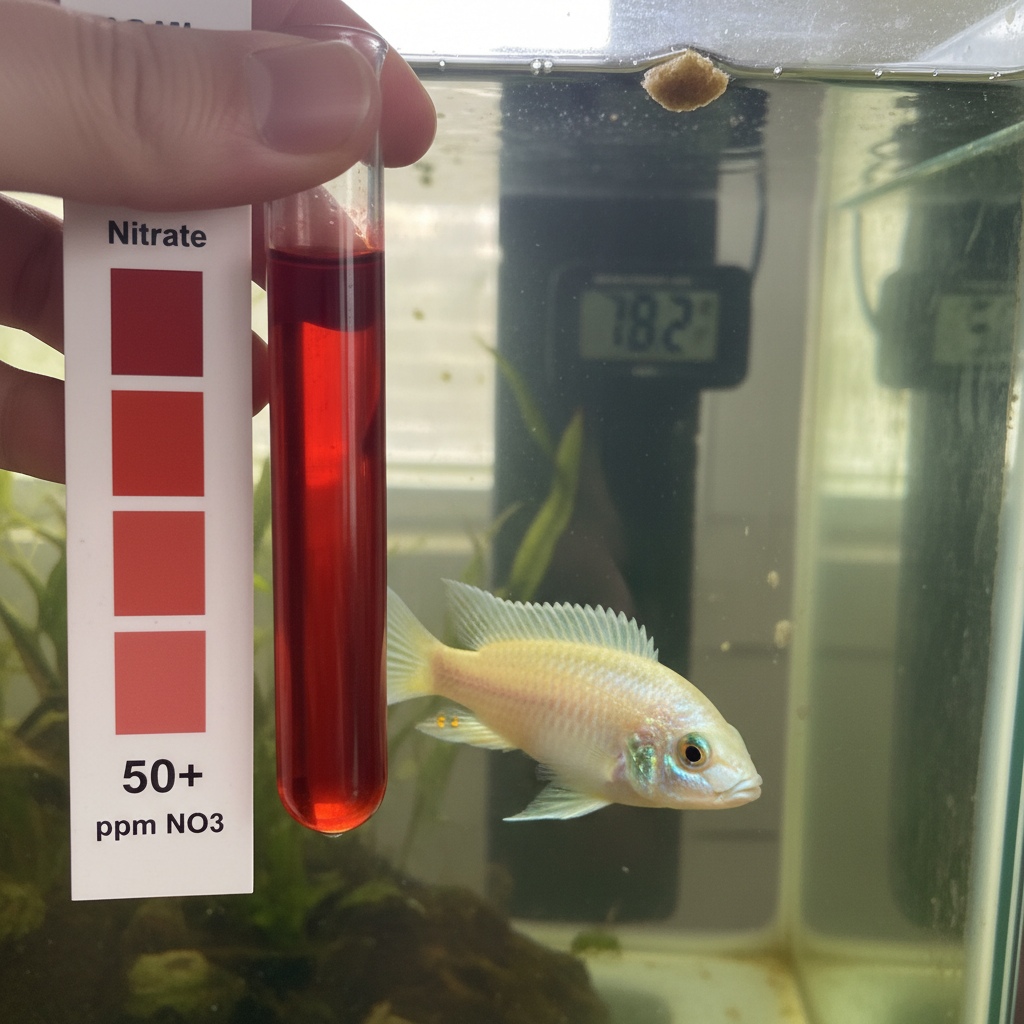
Defining a single 'safe' nitrate level can be tricky, as it varies depending on the type of aquarium and the fish species. Generally, for most freshwater community tanks, nitrate levels should ideally be below 20 parts per million (ppm). Some sensitive species or fry may require levels even lower, closer to 5-10 ppm. For saltwater fish-only tanks, keeping nitrates below 20 ppm is also a good target. In reef aquariums with corals, the goal is often much lower, typically below 5 ppm, as corals are very sensitive to nitrates. While some fish can tolerate higher levels for a short time, prolonged exposure to elevated nitrates causes chronic stress and health problems.
Signs Your Fish Have High Nitrate Poisoning
Fish exposed to high nitrate levels often show a range of symptoms, which can sometimes be subtle. Early signs might include increased fish stress symptoms, such as lethargy or reduced activity. You might notice your fish spending more time at the surface or bottom of the tank, or their colors may appear dull. As nitrate poisoning progresses, fish can exhibit rapid gill movement, loss of appetite, and stunted growth. In severe cases, you might see red blotches or sores on their body, or they may become more susceptible to other diseases. If you observe these signs, it's important to test your water immediately. AquaShelter's fish symptoms checker can help you narrow down potential issues based on your fish's behavior.
Beyond Fish: Other Dangers of High Nitrate in Your Tank
High nitrate levels don't just affect your fish; they impact the entire aquarium ecosystem. One of the most common consequences is an explosion of algae. Algae thrive on nitrates, leading to unsightly green water, fuzzy growth on decor, or brown films on surfaces. This algae bloom can compete with live plants for nutrients and light. In extreme cases, dense algae can reduce oxygen levels in the water, especially at night, further stressing your fish. Algae can also cause pH fluctuations, creating an unstable environment for your tank inhabitants.
What Causes High Nitrate in Aquariums?
Several factors contribute to elevated nitrate levels in an aquarium. The most common causes include:
- Overfeeding: Uneaten food decays, adding to the organic load that eventually becomes nitrate.
- Overstocking: Too many fish produce more waste than the beneficial bacteria can efficiently process, leading to higher nitrate accumulation.
- Infrequent Water Changes: Regular partial water changes are essential for removing nitrates, as biological filtration only converts waste, it doesn't remove nitrate from the water.
- Dirty Filters/Substrate: Accumulated detritus in filters or gravel can break down, contributing to nitrate.
- Decaying Organic Matter: Dead fish, dying plant leaves, or other organic debris will decompose and release ammonia, which then becomes nitrate.
- High Nitrates in Source Tap Water: Sometimes, your tap water itself contains nitrates. Always test your tap water before adding it to the tank.
Emergency Steps: How to Lower High Nitrate Quickly
If your nitrate test shows dangerously high levels, immediate action is necessary to protect your fish. The fastest way to reduce nitrates is through large partial water changes. Start by performing a 40-50% water change, ensuring the new water is dechlorinated and temperature-matched. Use a gravel vacuum to remove any accumulated waste from the substrate. Remove any visible decaying plant matter or uneaten food. After the water change, retest your nitrate levels. You may need to perform another large water change the following day if levels are still too high. Remember to test your tap water first to ensure you're not adding more nitrates.
Long-Term Solutions: Preventing High Nitrate Levels
Preventing high nitrates is easier than treating them. Implement these long-term strategies for a healthier aquarium:
- Regular Water Changes: Perform weekly or bi-weekly partial water changes (10-25%) to consistently remove nitrates.
- Proper Feeding Habits: Feed your fish small amounts they can consume in 2-3 minutes, once or twice a day. Avoid overfeeding.
- Appropriate Stocking Levels: Do not overstock your tank. Research the adult size and waste production of your chosen fish species.
- Consistent Filter Maintenance: Clean your filter media regularly, but avoid cleaning it too thoroughly with tap water, which can kill beneficial bacteria. Rinse in old tank water.
- Add Live Plants: Fast-growing live plants, like Anacharis or Hornwort, are excellent natural nitrate absorbers.
- Nitrate-Reducing Media: Consider using specialized filter media designed to remove nitrates, though these are often supplementary to good husbandry.
Nitrate vs. Nitrite: Why the Difference Matters
While both nitrate and nitrite are part of the nitrogen cycle, their toxicity and implications for your aquarium are very different. Nitrite is highly toxic to fish, interfering with their ability to carry oxygen in their blood. In a properly cycled fish tank, nitrite levels should always be zero. If you detect nitrite, it indicates that your tank's biological filter is either not fully established or has crashed. Nitrate, on the other hand, is the end product and is much less toxic. While high nitrate is harmful over time, high nitrite is an immediate emergency. Understanding this distinction is crucial for diagnosing water quality problems. For more on the initial stages of the nitrogen cycle, see our guide on aquarium ammonia poisoning.
When to Use AquaShelter for Safer Next Steps
When your fish show signs of distress or your water tests reveal high nitrates, AquaShelter can help you make informed decisions. Use the AquaShelter diagnosis checker to input your fish's symptoms and water parameters for potential causes. If you're considering specific nitrate reduction methods or other treatments, our aquarium treatment safety checker can help you evaluate their safety and effectiveness for your specific tank setup. Keeping a detailed tank history within AquaShelter, including water test results and observations, is invaluable for tracking trends and preventing future issues.
Safety Note: Always follow product label instructions for any water conditioners or treatments. If your fish are severely ill, consult with an aquatic veterinarian for professional advice.
Source note: For veterinary context on How ammonia forms, why testing matters, and how ammonia harms fish and aquatic systems., see UF/IFAS ammonia in aquatic systems guide. Compare that guidance with current water tests. Follow the product label and ask an aquatic veterinarian when treatment risk is involved.
Recognizing the Silent Threat of High Nitrate
Imagine your fish living in water that slowly becomes more and more polluted, like breathing stale air. That's what happens when nitrate levels in your aquarium climb too high. While nitrate is the least toxic compound in the nitrogen cycle, consistently elevated levels act as a chronic stressor, weakening your fish's immune system and making them susceptible to other diseases. It's not always an immediate, dramatic event like ammonia poisoning; instead, it's a gradual decline in health that can be easily overlooked until it's too late. Think of it as a slow drain on their vitality, impacting everything from their appetite to their ability to fight off infections.
Early Warning Signs and What to Look For
Catching high nitrate issues early can save your fish. Beyond the obvious signs like lethargy or dull colors, pay close attention to subtle behavioral changes. Are your fish less active than usual, or are they hiding more? Do they seem to be breathing faster, even when the water is well-oxygenated? You might also notice a lack of interest in food, or perhaps their fins appear clamped. In some cases, you might even see algae growth exploding in your tank, as nitrates are a primary nutrient for algae. If you observe any of these symptoms, it's a strong indicator that you should test your water parameters immediately. For a comprehensive guide on how ammonia forms and its impact, refer to the UF/IFAS ammonia in aquatic systems guide.
Don't wait for severe symptoms like red blotches or sores to appear. By then, your fish are already under significant distress. Regular water testing is your best defense, allowing you to identify rising nitrate levels before they become a serious health threat. If you're unsure about specific symptoms, use our Fish Symptoms Checker to help narrow down potential issues.
Use AquaShelter before you guess
If you are not sure whether the symptoms are coming from disease or water quality, try the AquaShelter diagnosis check before choosing a treatment.
Open the diagnosis checkDisclaimer: AquaShelter helps with triage and safer decisions, but it does not replace a qualified aquatic veterinarian.
FAQ
What is nitrate in an aquarium and how does it form?
Nitrate is the final product of the nitrogen cycle, formed when beneficial bacteria convert toxic ammonia into nitrite, and then nitrite into nitrate. It accumulates in the water as fish waste and uneaten food break down.
What are the signs or symptoms of high nitrate in aquarium fish?
Symptoms include lethargy, reduced activity, dull coloration, rapid gill movement, loss of appetite, stunted growth, red blotches or sores, and increased susceptibility to disease. These are often signs of chronic stress.
How can I quickly lower high nitrate levels In an aquarium?
The fastest way to lower high nitrates is by performing large partial water changes (40-50%). Also, use a gravel vacuum to remove detritus and remove any decaying organic matter from the tank.